
How to Style Handmade Ceramics in a Small UK Living Room
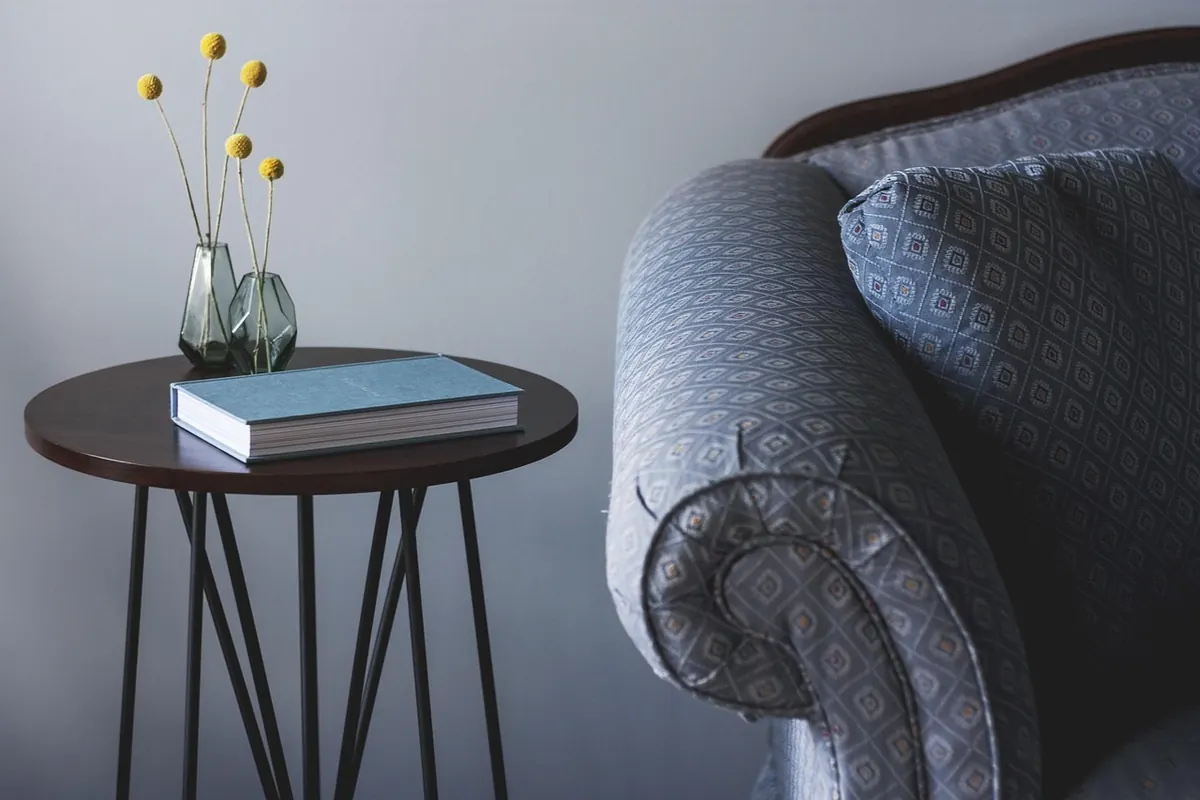
A small British living room has a lot going on. A radiator under the window, a chimney breast, one wall that catches decent light, and a sofa that takes up more floor than you would like. Into that space you are bringing a hand-thrown bowl, a speckled vase and perhaps a lamp with a slightly uneven rim. Ceramics can make a compact room feel considered rather than crowded — but only if each piece is given a clear job.
Measure the surface before you buy anything
It is tempting to start with the pot. Start with the surface instead. A windowsill in a Victorian terrace might give you fifteen centimetres of depth; a shelf inside a chimney alcove might give you ninety centimetres of width. Note those numbers on your phone before you browse, so a beautiful pot does not arrive and then spend a year on top of the wardrobe.
Two proportions do most of the work. A group of pieces should take up roughly half to two-thirds of the width of the surface — less and they look lost, more and they look like a shop display. And the tallest piece should be about twice the height of the shortest, so the group reads as one shape rather than a row of unrelated objects.
Buying online, trust the measurements rather than the photograph. A vase shot beside a linen throw can look enormous. Check the diameter of the base as well as the height, because handmade pots flare and taper, and it is the base that has to sit flat on your shelf.
Let the imperfections do the decorating
Studio pottery is never quite repeatable. There is a lean to the rim, a thumbprint near the foot, glaze that breaks pale over an edge, speckles where iron in the clay has come through. In a small room this is an advantage. Texture gives the eye somewhere to rest, and a handmade piece holds its own beside pattern in a way that a flat, glossy mass-produced vase often does not.
Resist the urge to correct it. Five pots lined up at identical heights looks like stocktaking; three at different heights, wobbles left alone, looks deliberate. If a piece leans, turn it so the lean points into the room rather than against a wall.
Vases: build in threes, then stop
The grouping that works hardest in a tight space is a tall bottle or stem vase, a medium jar, and a small bud vase. Put the three together, step back, and check whether you can see the wall behind them. If you can, add one more small piece. If you cannot, take one away.
A few things worth knowing:
- Keep arrangements low and wide rather than tall and spreading. Anything above shoulder height starts to cut the room in half.
- Dried stems last for months and need no water — honesty seed heads, alliums, dried grasses and eucalyptus all work well in a small vase.
- On a mantelpiece, people see the pot from the sofa at a downward angle, so the rim and the inside glaze matter as much as the silhouette.
- Empty is allowed. A vase with a strong glaze does not need flowers to justify its place.
- Never let a vase block the route between the sofa and the door, or the view of the only decent light source in the room.
Give bowls and dishes a job
A bowl with no purpose becomes clutter within a fortnight. Give it one. A shallow dish on the coffee table for coasters and the remote. A wide, low bowl by the front door for keys and the dog lead. A small dish on the windowsill for rings while you wash up. A fruit bowl that takes the oranges out of their plastic net is doing genuine work, and a heavy stoneware one will not slide about when someone reaches past it.
Nesting sets suit small rooms: stack three and use only the top one, so everything underneath is storage rather than display until you fancy a change. Put a felt pad or a scrap of cork between each pot so the glaze does not get scratched.
Table lamps: the quiet anchor
A ceramic base with a linen or cotton shade is one of the few things that works as furniture and as craft at the same time. In a compact room it does more for the atmosphere than an overhead light ever will, because it lights the corner rather than the whole space.
Some practical rules. The shade should be at least as wide as the widest part of the base, or the lamp looks top-heavy. Position the bulb so the light falls on the arm of the chair or the pages of a book rather than into your eyes when you are sitting down. Choose a warm bulb — the sort sold as warm white, around 2700K — because cool white light turns oatmeal and cream glazes a flat grey.
Route cables behind furniture and avoid running them under rugs, where years of foot traffic can damage the flex. If you have a cat, a toddler or a badly placed door, keep the taller, heavier pieces in an alcove and leave the windowsill for something small and sturdy.
Hold the room together with two glazes
Choose two glaze families and stay with them. Speckled oatmeal and a deep tenmoku, or a soft pale blue with a honey-coloured slipware. Then echo one of those colours once elsewhere: a cushion, a throw, the shade on the lamp. Once is enough. Matching everything exactly makes a small room look staged rather than lived in.
Light matters here. In a north-facing room, pale glazes and unglazed cream stoneware bounce light around and make the space feel wider. Against a dark painted wall, richer glazes — dark green, rust, near-black — hold their own, while pale pots can disappear.
A ten-minute reset that keeps it fresh
Every few months, take everything off the shelves. Wipe the surfaces, put back only what you have missed, and box the rest. Store spare pots wrapped in newspaper or a cotton cloth somewhere dry rather than in a cold loft or a damp cupboard, and avoid stacking heavy pieces on top of delicate ones.
Wash handmade ceramics by hand in warm water rather than putting them through a hot dishwasher cycle, and let them come to room temperature before pouring in anything very hot or very cold. Sudden changes in temperature are what crack a pot, not everyday use. If you use a shallow dish as a candle holder, check it sits flat, keep it clear of curtains, and never leave a flame burning unattended.
None of this needs to be permanent. Rearrange one shelf this weekend and see what the room does.
Photo: karishea / Pixabay