
Handmade vs High Street Accessories: A Practical Comparison for UK Shoppers
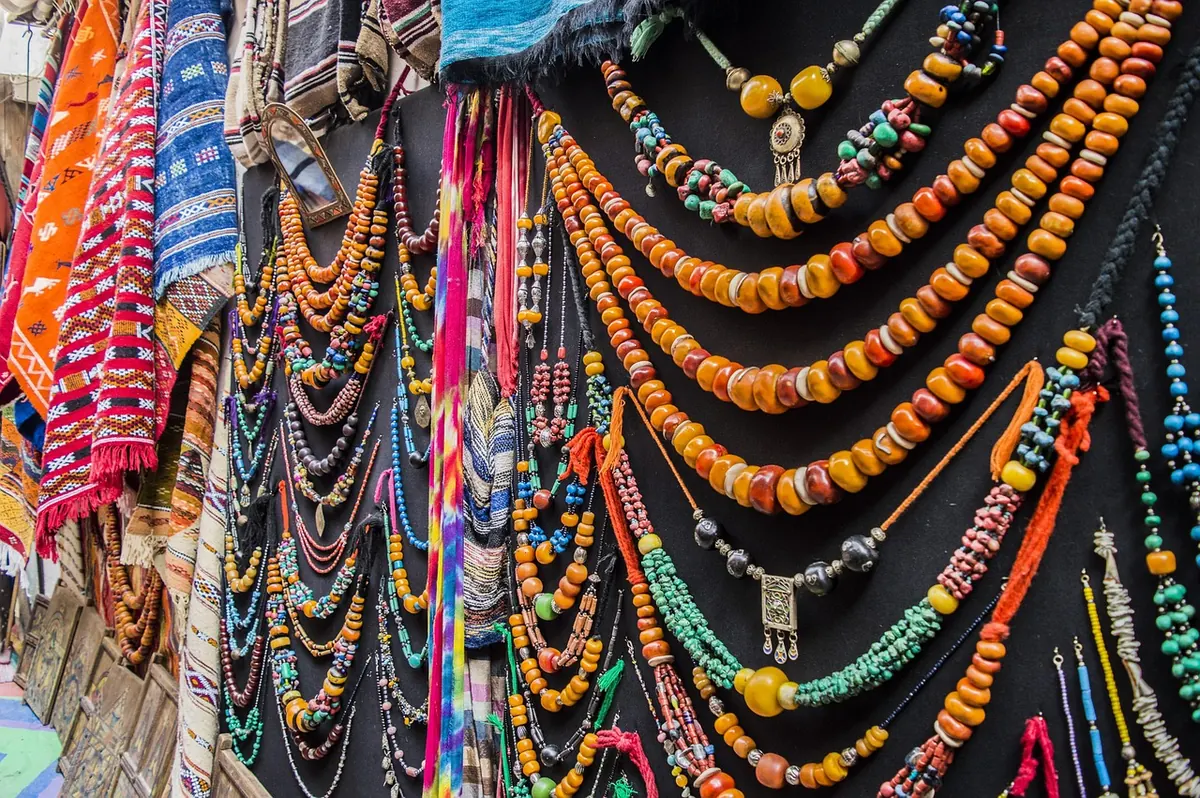
Two pairs of hoop earrings can sit in the same drawer and lead very different lives. One came off a sale rail in a shop with changing rooms and fluorescent lighting. The other was made by someone who soldered the jump rings at a workbench in a spare room and posted it out wrapped in tissue paper. The price gap between them can be wide. Whether that gap is worth paying comes down to four things: cost, durability, ethics and style.
What "Handmade" Actually Means
The word is not regulated in the way most shoppers assume. It can describe a single maker who cuts, shapes and finishes every component themselves. It can also mean someone who buys in a chain, adds a charm and packages it nicely. Both are legitimate ways to run a small business, but they have very different cost bases, and you deserve to know which one you are buying from.
The simplest way to find out is to ask. Who made it? Where did the materials come from? If a clasp fails in a year, can it be repaired? A confident maker will answer all three without hesitation. Vague answers are not necessarily a warning sign, but a reluctance to explain anything usually is.
Cost: The Upfront Price and the Cost Per Wear
Handmade accessories usually cost more at the till. That is not because makers are precious about their work. Buying twenty clasps costs far more per clasp than buying two thousand, and a small workshop has no factory floor to absorb the cost of a mistake. Labour, too, is generally paid by the hour at a rate that reflects actual skill.
High street prices are pushed down by volume, cheap base metals, plated finishes and manufacturing in places where wages are low. That does not make every high street buy a bad one. You are often paying for speed, convenience and a design team that spots a trend early — all genuinely useful things.
The number that matters is cost per wear. A hand-stitched belt you wear four days a week for five years is cheap by the time you divide it up. A novelty piece worn twice is expensive however little it cost. Before you decide, be honest about how often the item will actually leave the house.
Which Holds Its Value?
Solid silver, gold and well-made leather tend to resell reasonably well on second-hand marketplaces, and they can be repaired rather than replaced. Trend-led pieces in plated metal or coated plastic rarely recover much of their original price, and they are difficult to mend when they fail.
Durability: Where the Money Goes
Mass-produced jewellery usually fails at the points of contact. Plating wears through where a chain rubs against a ring, glued-in settings work loose, and elasticated bracelets stretch out of shape within a season. None of this is sabotage — it is simply what happens when a piece is built to hit a price point.
Handmade work tends to put its budget into the parts you cannot see. Jump rings are soldered or fully closed so they do not catch on knitwear. Beads are knotted rather than glued. Stress points on a bag get rivets or a second row of stitching. If you are buying silver, gold, platinum or palladium above a certain weight, UK law requires it to carry a hallmark from an assay office — a useful reassurance that the metal is what the seller says it is.
Repairs matter as much as construction. A maker can re-string a bracelet, replace a clasp or re-stitch a strap for a fraction of the original price. Most high street retailers do not repair at all; they replace, and only within a warranty window.
What to Look For in the Hand
- Soldered or fully closed jump rings rather than open loops
- Ear wires and posts in sterling silver, gold or good-quality stainless steel, not plated brass
- Knotted beadwork with doubled thread at the clasp
- Stitching that is back-stitched at the ends, not a single loose row
- Clasps and hooks that feel solid between finger and thumb, not bendy
- Clean, even edges and a finish that matches on the front and the back
Ethics: What You Are Really Supporting
Buying handmade keeps more of your money with the person who made the thing. Small batches also mean less overproduction — the piece you buy was made to be sold, not discounted into a landfill. Those are real advantages.
They are not automatic, though. A maker can still buy cheap findings from an unclear supply chain, and environmental claims on accessories are not policed as tightly as shoppers tend to assume. If provenance matters to you, ask specific questions: where is the silver from, is the leather vegetable-tanned, is the packaging plastic-free? Specific questions get specific answers.
The high street is not standing still. Some larger retailers now publish supplier lists and run take-back or repair schemes. But scale makes a long supply chain hard to see into, and it is fair to weigh that up. For many people, the most ethical purchase of all is simply buying fewer accessories and wearing the ones they own for longer.
Style: Individuality Against Trend
High street shopping wins on immediacy. You can try something on, see how it sits with your coat, and return it easily if it does not work. That makes it ideal for experimenting with a bold shape or colour you might only wear for a season.
Handmade wins on particularity. You can choose the exact colour, ask for a longer chain, a wider band or a shorter strap, and commission something that fits your actual wardrobe rather than a mannequin's. You are unlikely to spot the same piece on three other people at a wedding.
The trade-offs are worth knowing before you order. Lead times can run to a few weeks, one-off designs sell out and never return, and returns are often restricted because the item was made specifically for you. Read the shop policies first.
Most wardrobes work best as a mix. Treat the high street as a testing ground for trends and buy handmade for the pieces you reach for weekly — everyday earrings, a belt, a bag you carry constantly.
A Practical Way to Decide
- Estimate how often you will wear it. Weekly pieces justify a higher upfront price.
- Read the materials list rather than the marketing copy, and note whether the metal is plated or solid.
- Study photographs of the clasp, hinge and back of the piece, not just the styled front-on shot.
- Ask about repair options and lead times before you pay, particularly for made-to-order work.
- Check the returns policy, postage costs and whether a commission can be altered once started.
- Look through the maker's other pieces. Consistent finishing and clear, honest photos tell you a lot.
Buying Well, Whatever Your Budget
There is no rule that says you must choose one side. A high street purchase made with clear eyes can be a sensible, enjoyable buy, especially for something short-lived or experimental. Handmade earns its place on the pieces you wear until they wear out.
Whichever you choose, look after it. Keep jewellery dry and away from perfume and hairspray, store silver in a tarnish-resistant pouch, wipe plated pieces gently rather than scrubbing them, and keep leather away from radiators. If something breaks, ask about repair before you replace it. Going back to the person who made a piece is one of the quiet pleasures of buying handmade — they will usually remember it, and they will usually be able to fix it.
Photo: winksen / Pixabay